Free Basic Electricity and Free Basic Water: Who Qualifies, How to Register as Indigent and How to Claim Your Units
Choose SA Gov Info as a preferred source, and Google will show you our SASSA, NSFAS, price and sport updates more often in Top Stories.
Button not showing? Add SA Gov Info as a preferred source on Google
Many households that qualify never get these units. In its power system update of 6 November 2026, Eskom said 561,229 of its customers were registered for free basic electricity, only about 27% of the 2.1 million customers who are eligible. Registering takes one visit to your municipality, and after that the units come every month.
What You Get for Free
The national government sets a minimum, and each municipality can give more from its own budget.
| Service | National basic amount | What some municipalities add |
|---|---|---|
| Electricity | 50 kWh per household per month | A full subsidy or a top-up; the City of Cape Town gives up to 60 free units |
| Water | 6 kilolitres per household per month (25 litres per person per day) | Cape Town gives 15 kilolitres to indigent households |
| Sanitation, refuse and rates | Set by each municipality | Free or reduced sanitation, refuse removal and property rates for registered households |
The water amount comes from the national standards under the Water Services Act. Regulation 3 says a basic water supply means at least 25 litres per person per day or 6 kilolitres per household per month, at a flow of at least 10 litres a minute, within 200 metres of the home.
The electricity amount is 50 kWh in Eskom’s free basic electricity programme. Eskom says some municipalities give 100% free basic electricity, others give only the 50 kWh, and some add a top-up they pay for themselves.
Who Qualifies
Free basic services are for indigent households: households that can show they cannot afford to pay for basic services. There is no single national income limit. Every municipality writes its own indigent policy, which sets the income limit, the documents and who in the household counts.
Eskom and the government describe the programme as help for unemployed, low-income, destitute and elderly people. In practice, that often means pensioners, households living on SASSA grants and households where nobody has a job, as long as the total household income is under the municipality’s limit.
As an example, in its November 2025 notice the City of Cape Town said homeowners with a household income of R7,500 a month or less could get free basic services and a 100% discount on their property rates. Other municipalities use different limits, so ask yours.
The electricity meter rules
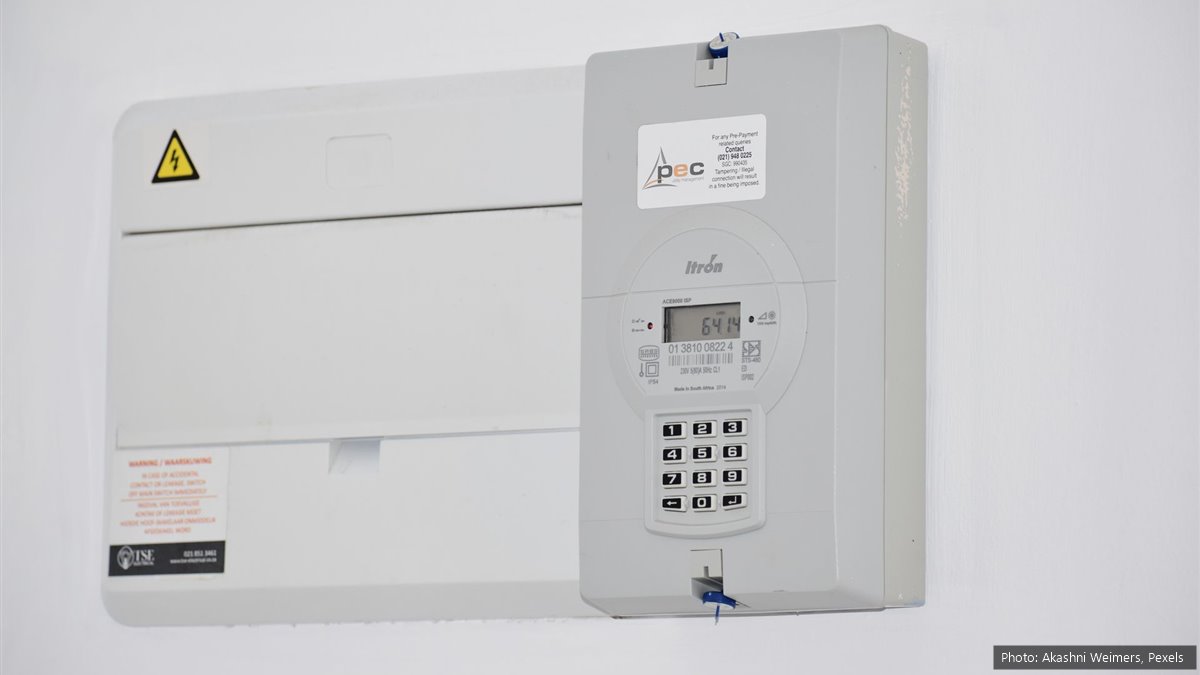
Eskom adds rules about the meter for its own customers:
| Your meter | Can you get free basic electricity? |
|---|---|
| 20 Amp prepaid meter | Yes, under the national policy |
| 60 Amp prepaid meter | Yes, if the municipality lists your household as indigent |
| Conventional (credit) meter | Yes, if you use less than 150 kWh a month on average |
| Account in arrears and supply cut off | No, not until you have met the conditions to have the supply restored |
How to Register as an Indigent Household
Eskom does not decide who gets free basic electricity and does not keep the indigent list. The municipality decides, and sends its list to Eskom. So everything starts at the municipal office.
- Go to your municipality’s customer service office or revenue office and ask for the indigent (free basic services) application form. You can also ask your ward councillor or a Community Development Worker where to apply.
- Fill in the form for the whole household, including everyone’s income.
- Attach the documents the municipality asks for (see the list below).
- Hand it in and ask for a reference number or a stamped copy.
- The municipality checks your income. If you qualify, it adds your household to its indigent register and, for Eskom customers, loads your meter onto Eskom’s system.
- Ask when the first units will be available, and when you must apply again.
Documents you will usually need
Each municipality has its own list. The City of Cape Town, for example, asks for:
- ID copies of the owner and spouse or partner
- proof of income, such as the latest payslip or a letter from the employer
- three months of bank statements for every bank account
- an affidavit confirming that you are unemployed, if you have no work
- three months of bond statements, or an affidavit saying there is no bond
- consent to have a prepaid meter installed
Bring your SASSA grant letter if anyone in the house gets a grant, and your electricity meter number or municipal account number.
Renewing your registration
Indigent status does not last forever. In Cape Town, applicants under 60 must apply again every year, and applicants aged 60 and older about every three years. Many other municipalities also want a yearly renewal. If you miss it, the free units can stop even when your income has not changed.
How to Claim Your Free Electricity Token
How you get the units depends on your meter.
Eskom prepaid meters
- Free basic electricity is given on the 1st of every month.
- Dial *130*869# or *130*269# on your phone, or ask at your local electricity vendor. You do not have to buy electricity to collect the free token.
- Type the token number into your meter like any other token.
Conventional (credit) meters
You do not need a token. The municipality credits your account with the free allocation each month, and you pay only for what you use above it.
Rules for the units
- You can claim one free token a month, from one municipality only.
- Unclaimed units do not add up. If you do not claim in a month, that month’s units are lost.
- A token must be used in the month you claim it. It does not work in later months.
- You cannot swap unused units for cash or for another service.
If you buy electricity from your municipality (for example City Power in Johannesburg), the municipality runs free basic electricity for you itself. Ask its customer care how to claim.
Is the 50 kWh Going Up?
Not yet. On 18 August 2026, Electricity and Energy Minister Kgosientsho Ramokgopa said the government proposes to raise free basic electricity from 50 kWh to between 200 kWh and 300 kWh a month for qualifying households, as part of the Revised Electricity Pricing Policy. He also said the department wants a central, national free basic electricity database linked to Home Affairs and social grant records, so that people who qualify for a grant can also be found for free basic electricity.
The policy was published for public comment in Government Gazette 55257 on 28 August 2026, and the Minister extended the closing date for comments to 28 October 2026. It still has to be finalised and approved before anything changes. In November 2026, the allocation is still 50 kWh, so register now under the current rules.
Common Problems and What to Do
| Problem | What to do |
|---|---|
| The USSD code says you do not qualify | Your meter has not been loaded yet. Ask the municipality whether you are on the indigent register and whether it has sent the list to Eskom |
| You moved house | Register again at the municipality for the new address; the benefit is linked to the meter and the municipality |
| The account is not in your name | Ask the municipality what it needs, for example an affidavit or a letter from the owner. Tenants’ rules differ between municipalities |
| You were registered but the units stopped | Check whether your registration expired and renew it |
| Someone offers to register you for a fee | Applying at the municipality is the official route. Do not pay anyone and do not give your ID number to strangers |
If you have no income at all, SASSA’s Social Relief of Distress grant may also help, and Legal Aid South Africa gives free legal advice if a municipality treats you unfairly.
Free Basic Electricity and Water Questions
How do I register for free basic electricity?
Go to your municipality’s office and apply to be registered as an indigent household. Take your ID, proof of income, bank statements and your meter number. Once the municipality approves you, it loads your meter onto Eskom’s system and you can claim the free units every month.
Can I apply for free basic electricity online?
Eskom does not take applications. Some municipalities accept the indigent form by email or online. The City of Cape Town, for example, accepts it at its customer centres, through e-Services or by email. Ask your municipality which channels it uses.
What is the USSD code for free basic electricity?
Eskom lists *130*869# and *130*269# for prepaid customers to claim the free token. You can also collect it from your local vendor without buying electricity.
How much free electricity do I get?
The national programme gives 50 kWh per household per month. Some municipalities give more or add a top-up. The government has proposed raising it to between 200 kWh and 300 kWh, but in November 2026 that is still only a proposal.
How much free water does a poor household get?
The national basic amount is 6 kilolitres (6,000 litres) per household per month, or 25 litres per person per day. Some municipalities give more to registered households; Cape Town gives 15 kilolitres.
Do pensioners get free electricity automatically?
No. A pensioner must still register as indigent at the municipality, but many pensioners qualify because their household income is low. Some municipalities also have separate rates rebates for pensioners.
More: Electricity price increase 2026/27 | Load shedding today | SASSA grant increase 2027
2 Comments
Comments are closed.