SASSA SRD Status Declined? Meaning of Every Error Code and How to Fix It
Nothing is more frustrating than checking your SASSA SRD status and seeing the dreaded “Declined” message. Millions of South Africans rely on the R370 Social Relief of Distress (SRD) grant, and a rejection can be stressful.
However, a “Declined” status is not always the end of the road. In many cases, it is due to a system error or outdated information in the government database.
In this guide, we will explain exactly what each SASSA decline reason means and, most importantly, how you can fix it to get your money.
Common SASSA Decline Reasons and How to Fix Them
If your application was rejected, SASSA will provide a specific reason. Here is a breakdown of the most common error codes and the steps to resolve them.
1. Identity Verification Failed
What it means: This is one of the most common errors. It means the personal details you provided (Name, Surname, ID Number) do not match the data held by the Department of Home Affairs (DHA).
How to Fix It:
- Double check your application for typing errors.
- Ensure your name matches exactly what is on your green ID book or Smart ID card (e.g., if you have a double barrel surname).
- Action: You must correct your details on the SASSA portal and request a re-verification.
2. “Means Test Failed” (Income Too High)
What it means: SASSA checks your bank account every month. If they detect an inflow of funds totaling more than R624 in a specific month, your grant will be declined for that month.
How to Fix It:
- Check your bank statement. Did family or friends send you money? Even if it wasn’t income, SASSA sees it as funds.
- Action: If you are sure your income was below R624, you must lodge an appeal on the SRD website.
3. UIF Registered
What it means: The system shows that you are receiving receiving funds from the Unemployment Insurance Fund (UIF). You cannot receive both UIF and the SRD grant.
How to Fix It:
- Scenario A: If you are getting UIF, you do not qualify.
- Scenario B: If you lost your job and are no longer getting UIF, the Department of Labour’s database might be outdated.
- Action: You must appeal and provide proof that you are not receiving UIF payments.
4. NSFAS Registered
What it means: Students funded by the National Student Financial Aid Scheme (NSFAS) are not eligible for the R370 grant.
How to Fix It:
- If you have dropped out of university or college and are no longer receiving NSFAS, you need to contact NSFAS to update your status before appealing to SASSA.
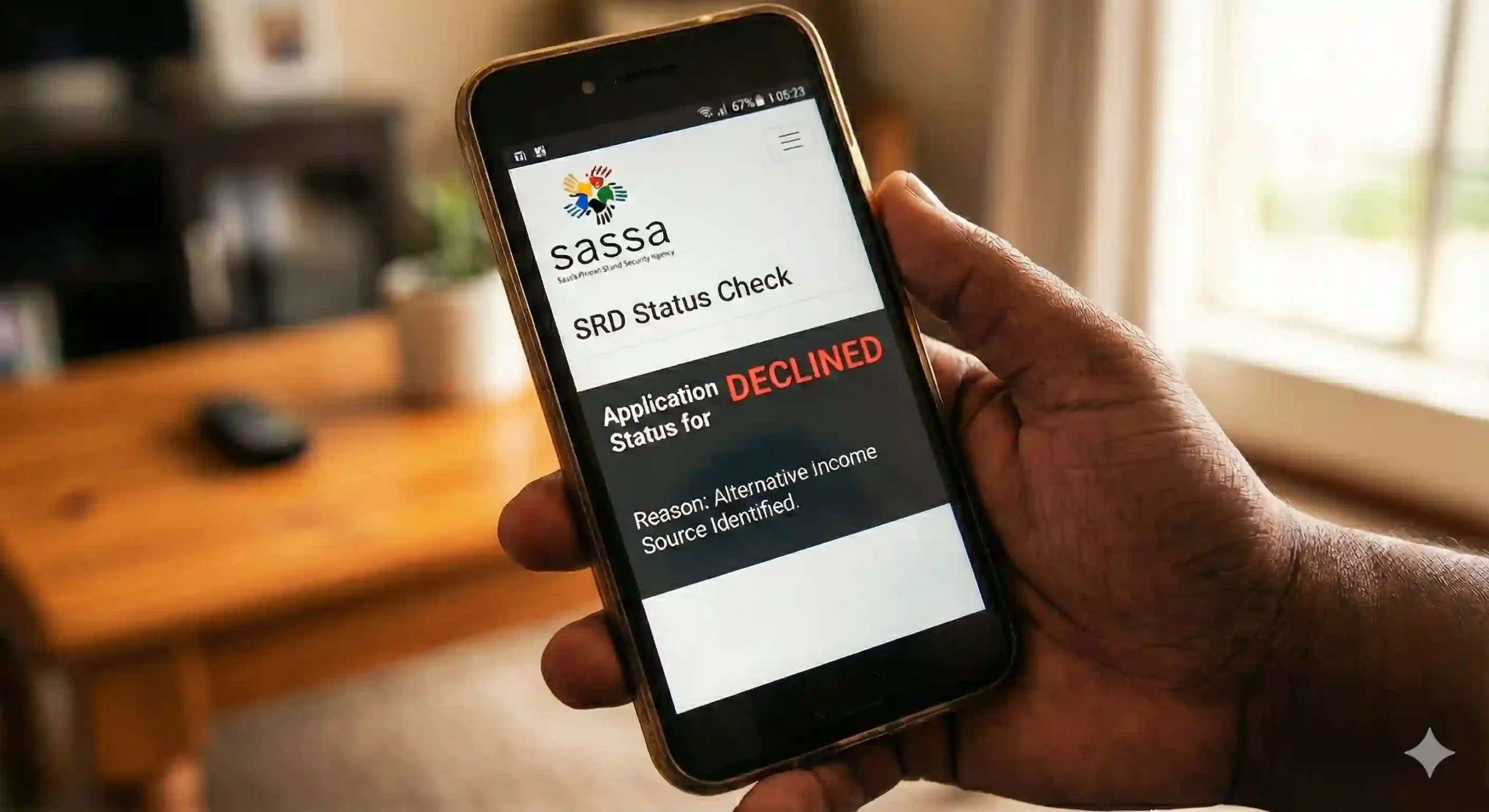
5. Alternative Income Source Identified
What it means: SASSA has detected money coming into your account, but they cannot identify the source (unlike UIF or Gov payroll). This usually happens if your bank balance exceeds the threshold.
How to Fix It:
- This is often a banking issue. Ensure your bank account is not being used by someone else to deposit wages.
- Action: Lodge an appeal immediately if you have no income.
The Ultimate Solution: How to Appeal a Declined Status
If you believe your status was declined unfairly, you have the right to appeal. You must appeal for every single month that was declined.
Step-by-Step Appeal Process:
- Go to the SRD DSD Appeal Website (srd.dsd.gov.za).
- Enter your ID number and the phone number used for the application.
- Request a PIN and log in.
- Select the month you are appealing for (e.g., January 2025).
- Provide the reason why you are appealing (e.g., “I have no income”).
- Submit the appeal.
Note: Appeals usually take 60 to 90 days to be processed by the Independent Tribunal for Social Assistance Appeals (ITSAA).